Tell us about the job
Takes about a minute. No obligation.
A contractor diagnosing a failed central AC unit in Oceana County is not looking at equipment worn down by relentless weather. 33 severe weather events were recorded in Oceana County, Michigan between 2015 and 2024. At that rate, severe weather is an event here, not a standing condition, and a compressor or capacitor that gives out is almost certainly carrying years of deferred maintenance or a factory lifespan rather than accumulated storm damage. The parts a contractor checks first are the ones that age quietly: refrigerant levels, electrical contacts, and whether the system was ever properly serviced.
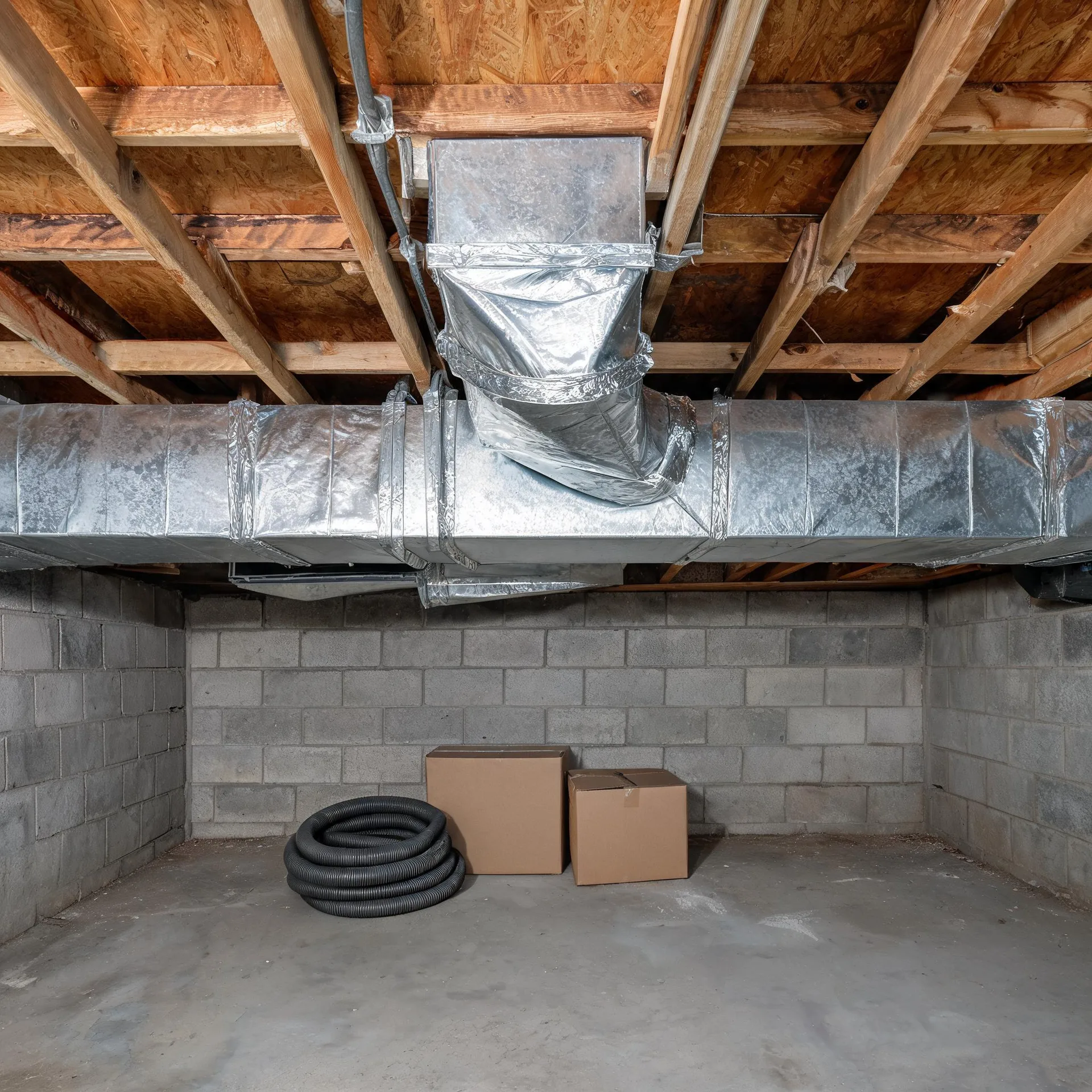
Ductwork that has been adapted more than once and systems that have cycled through replacements leave a contractor opening equipment that may take parts no longer in regular production. Half the homes in Oceana County, Michigan were built in 1978 or earlier (2020-2024 ACS 5-year). A system sitting in a house that old has often been the second or third unit in that space, and what the compressor or coil actually turns out to need once it is open is what sets the repair cost, not the age on the permit. If a part is scarce, a contractor knows before ordering, and that answer shapes what gets quoted next.
The Parts of a Central AC a Contractor Checks First
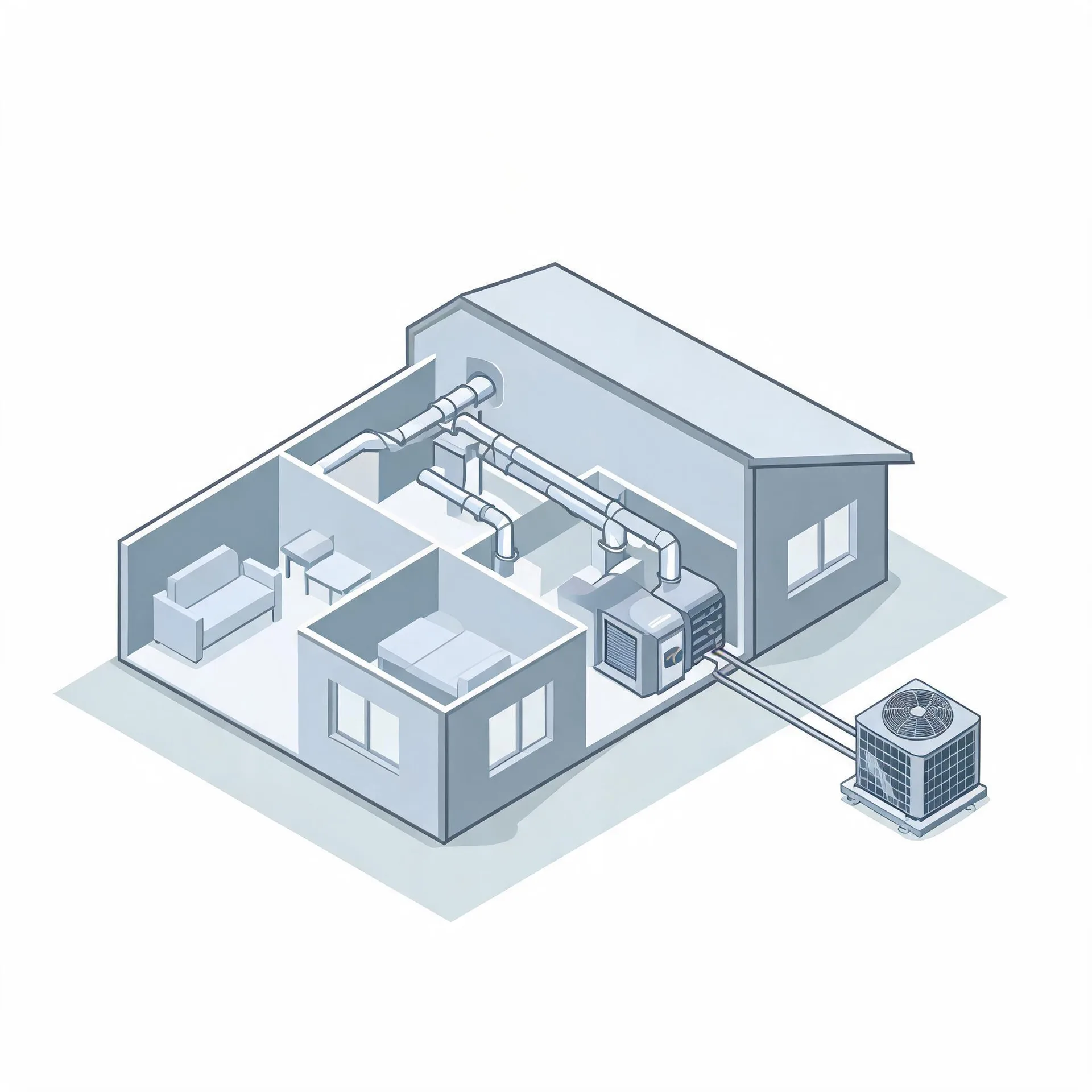
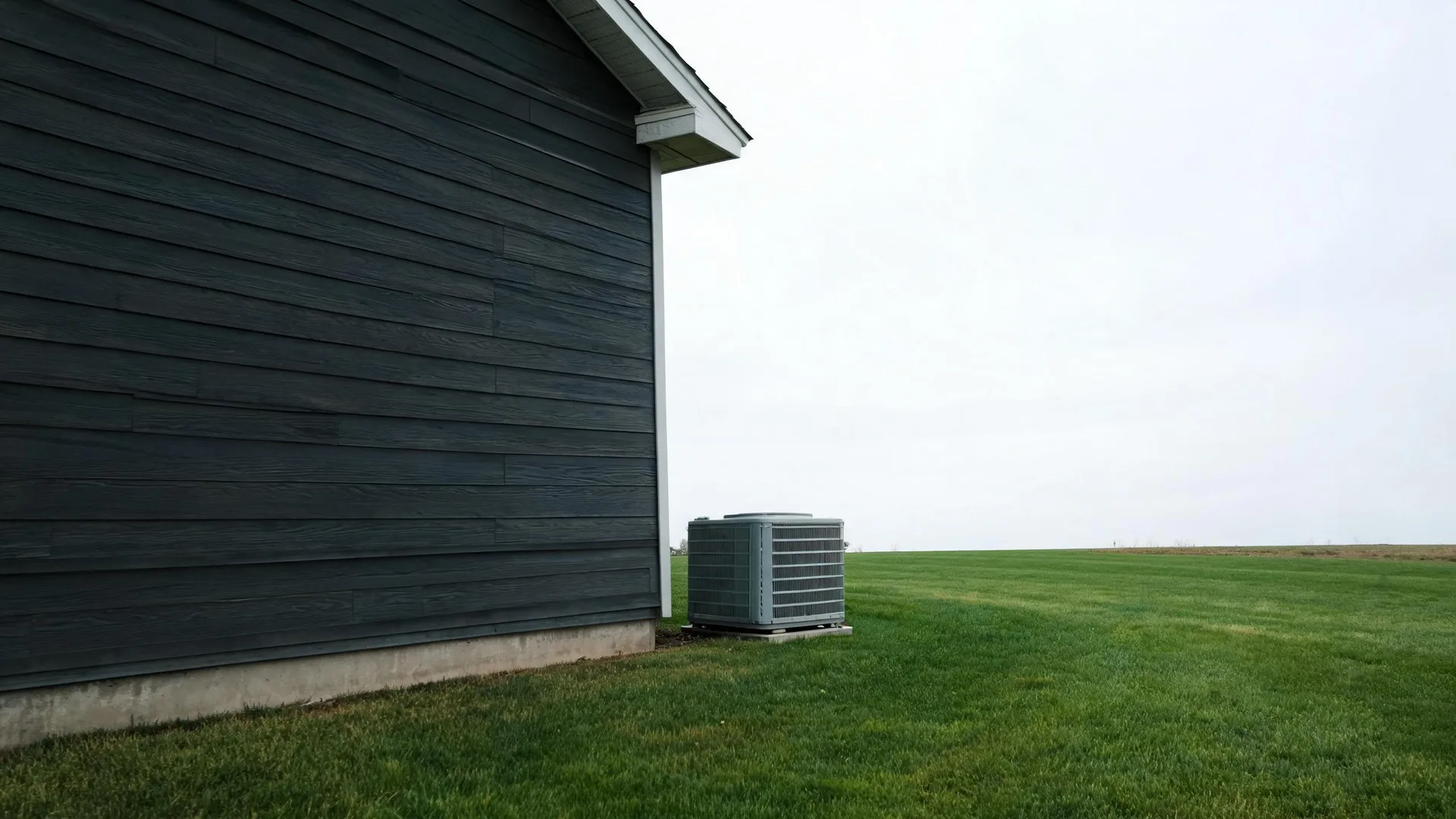
The outdoor condenser unit sits on a pad beside the house and holds the compressor and condenser coil, the two components a contractor reaches for first when a system stops cooling. The compressor is the heart of the refrigerant circuit, and a failed one is one of the more definitive findings a technician can make. The condenser coil sheds heat to the outside air, and a damaged or dirty coil shows up quickly in a system that runs but cannot keep up.
Inside, the air handler or furnace cabinet holds the evaporator coil and the blower fan, both of which sit in the path of every cubic foot of air the system moves. The evaporator coil is where refrigerant absorbs heat from indoor air, and a leak or freeze there explains a wide range of symptoms. The blower moves conditioned air into the duct system, and a weak motor or failed capacitor upstream of it can mimic refrigerant problems closely enough that a contractor checks both.
The drawing shows the general layout of a central AC system, and a licensed contractor determines which components apply to your particular house and setup.
Find a contractor in Oceana CountyOceana County, by the numbers
33 severe weather events were recorded in Oceana County, Michigan between 2015 and 2024.
NOAA National Centers for Environmental Information, Storm Events Database, bulk CSV export, events 2015-01-01 through 2024-12-31.Half the homes in Oceana County, Michigan were built in 1978 or earlier (2020-2024 ACS 5-year).
U.S. Census Bureau, 2020-2024 American Community Survey 5-Year EstimatesOceana County, Michigan holds 15,723 housing units (2020-2024 ACS 5-year).
U.S. Census Bureau, 2020-2024 American Community Survey 5-Year EstimatesOwners occupy 84.5% of the occupied homes in Oceana County, Michigan (2020-2024 ACS 5-year).
U.S. Census Bureau, 2020-2024 American Community Survey 5-Year EstimatesCodes & Standards Governing Central AC Repair in Oceana County, Michigan10 sourced rules and standards
What HVAC Repair Looks Like in Oceana County
Split-system central air conditioners rated below 45,000 Btu/h manufactured on or after January 1, 2023 must meet a federal minimum of 13.4 SEER2.
Split-system central air conditioners rated at or above 45,000 Btu/h manufactured on or after January 1, 2023 must meet a federal minimum of 13.4 SEER2.
Split-system central air conditioners manufactured between January 1, 2015 and December 31, 2022 had to meet 13 SEER, the metric that preceded SEER2.
Single-package central air conditioners manufactured on or after January 1, 2023 must meet a federal minimum of 13.4 SEER2.
Space-constrained central air conditioners manufactured on or after January 1, 2023 must meet a federal minimum of 11.7 SEER2.
Federal efficiency standards for split-system central air conditioners and heat pumps are set on each certified combination of outdoor unit and indoor coil rather than on the outdoor unit alone.
Residential and light commercial air conditioning and heat pump systems assembled in the field, including mini-splits and unitary systems, may not be installed on or after January 1, 2025 using a refrigerant with a global warming potential above 700.
A field-assembled system whose specified components were all manufactured or imported before January 1, 2025 carries no installation compliance date under the refrigerant restrictions and may still be installed.
Licensing and Legal Requirements in Oceana County, Michigan
Michigan issues the mechanical contractor’s licence by classification: HVAC equipment, ductwork, refrigeration, hydronic heating and cooling, and limited or unlimited heating and refrigeration service are each a separate classification a contractor has to hold.
Michigan requires a mechanical contractor’s licence: nobody may install, alter or service the regulated mechanical work unless they, or an employee, hold a licence from the department that has not been revoked or suspended.
Severe Weather Events in Oceana County
Weather puts real load on cooling equipment, and that load accumulates over time. Knowing what the climate has demanded in Oceana County shapes what a local contractor looks for when diagnosing a system that has been running through it.
33 severe weather events, 2015–2024. Source: NOAA National Centers for Environmental Information, Storm Events Database.