Tell us about the job
Takes about a minute. No obligation.
A contractor looking at a failed central AC unit in Grand Traverse County has to decide what actually wore the system down. 78 severe weather events were recorded in Grand Traverse County, Michigan between 2015 and 2024. At that rate, severe weather is an occasional fact of life here, not a constant one, which means it sits well down the list of likely causes when a compressor quits or refrigerant pressure drops. The components that tend to fail in this county fail because they are old, poorly serviced, or were installed without enough margin for the job. Contractors quote and diagnose accordingly.
Half the homes in Grand Traverse County, Michigan were built in 1986 or earlier (2020-2024 ACS 5-year). A central AC system running in a house that old has almost certainly been repaired at least once, and what a contractor finds when they open it reflects that history: spliced wiring, aftermarket capacitors, a compressor that is not the original. The real question on a repair call is whether the failed component still has a current part number. When it does not, the job changes shape, and the homeowner is deciding something larger than the line item that brought the contractor out.
The Parts of a Central AC a Contractor Checks First
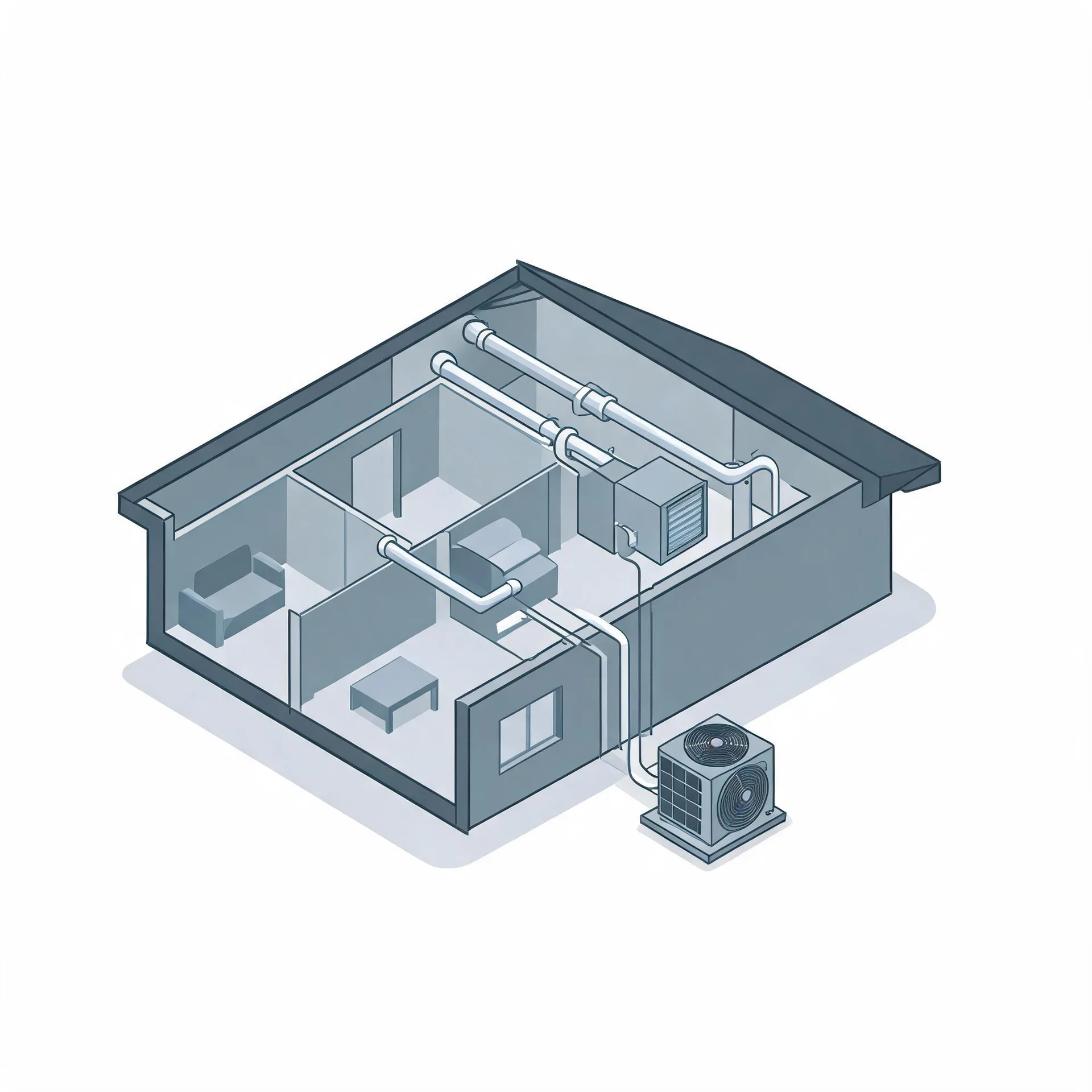
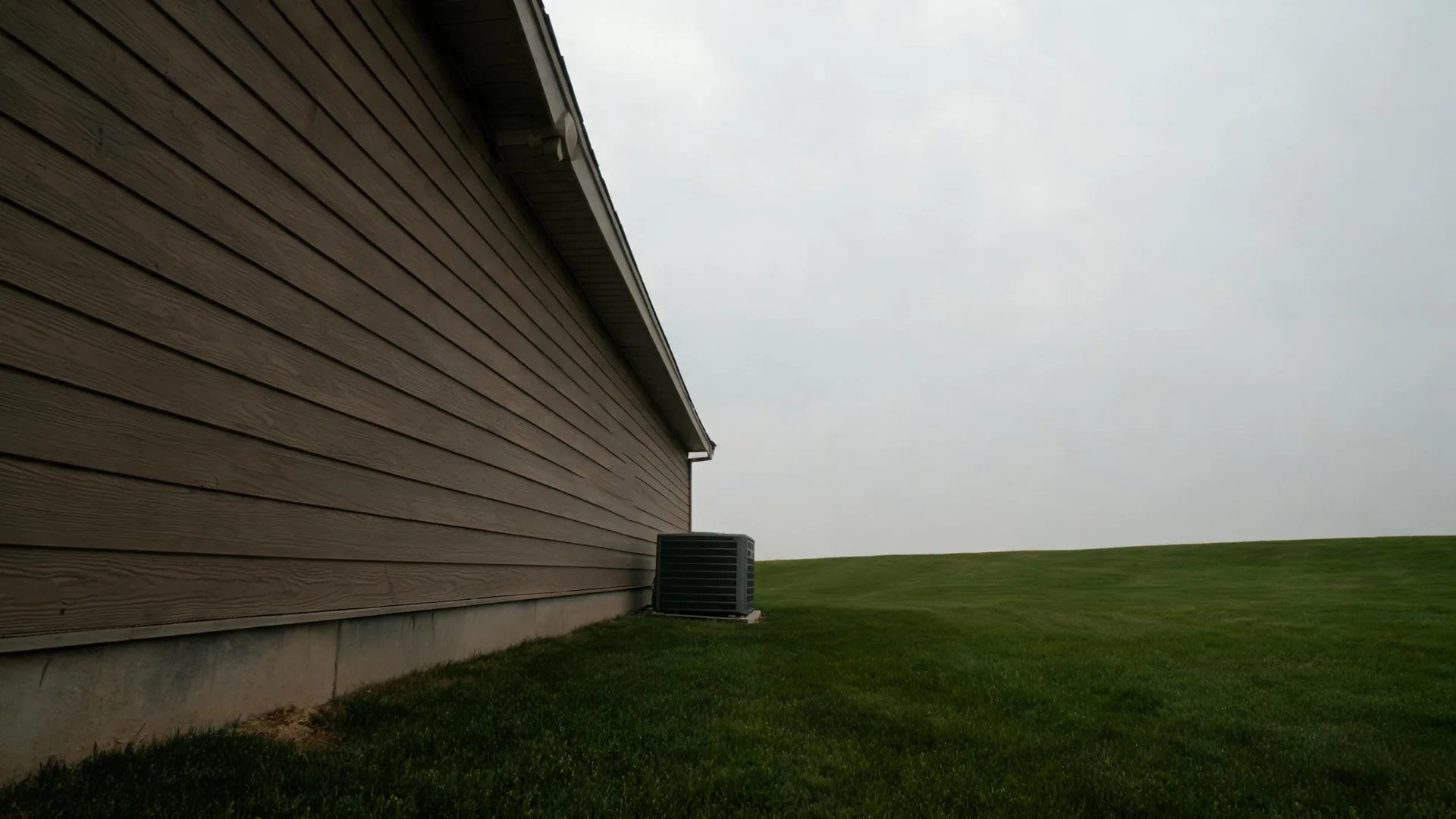
The outdoor condenser unit sits outside the house, usually on a concrete pad alongside the foundation, and it is where heat gets pushed out of the building. Inside, the air handler or furnace cabinet holds the evaporator coil, which is the piece that pulls heat from indoor air. Both are common starting points when something has gone wrong.
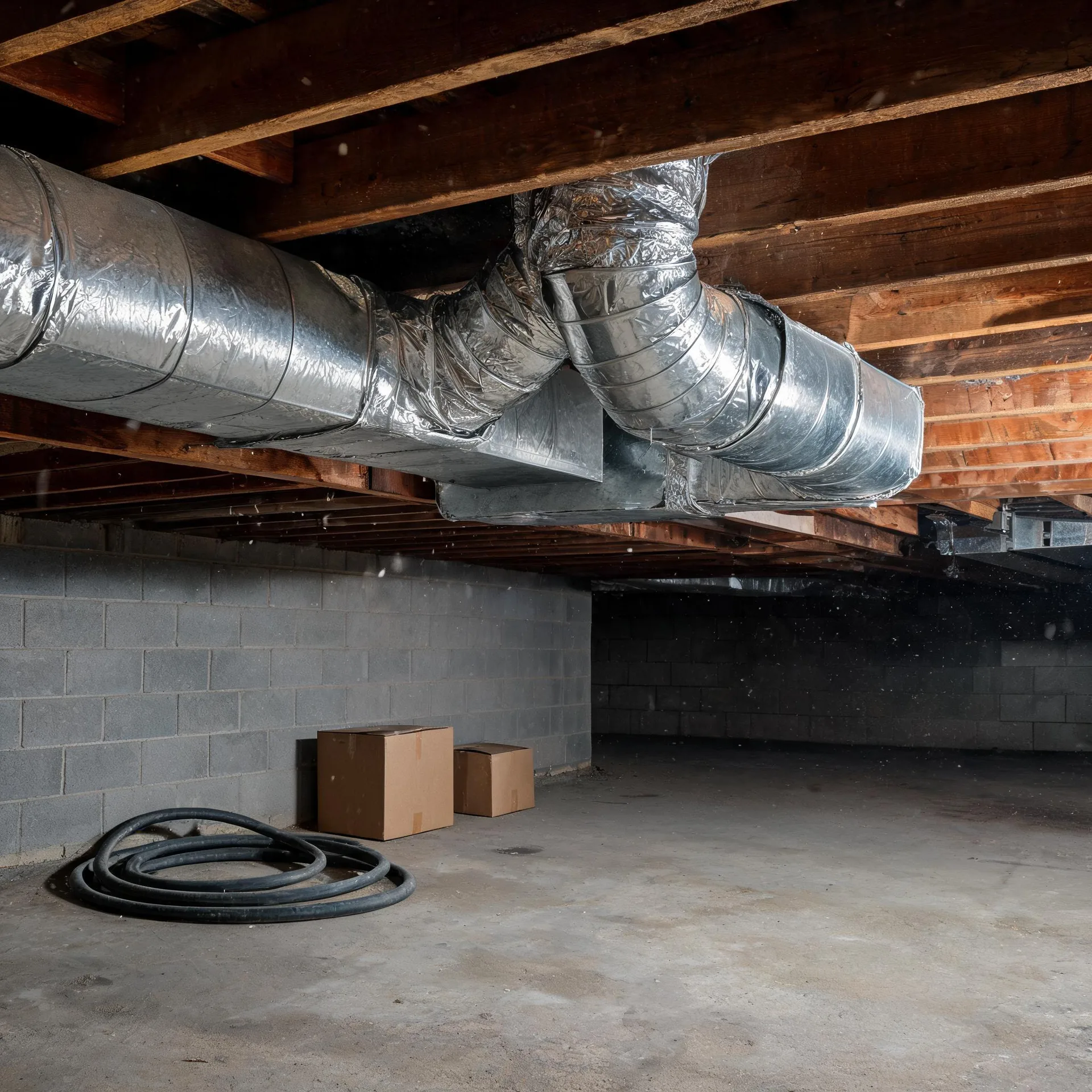
A refrigerant line set runs between those two units, and a contractor checks it for leaks or damage when neither the indoor nor the outdoor unit is the obvious problem. The thermostat, mounted on an interior wall, controls the whole sequence, and a faulty one can mimic symptoms that look like a much larger failure.
The drawing shows a typical layout, and a licensed contractor determines what applies to your specific house and equipment.
Find a contractor in Grand Traverse CountyGrand Traverse County, by the numbers
78 severe weather events were recorded in Grand Traverse County, Michigan between 2015 and 2024.
NOAA National Centers for Environmental Information, Storm Events Database, bulk CSV export, events 2015-01-01 through 2024-12-31.Half the homes in Grand Traverse County, Michigan were built in 1986 or earlier (2020-2024 ACS 5-year).
U.S. Census Bureau, 2020-2024 American Community Survey 5-Year EstimatesGrand Traverse County, Michigan holds 47,003 housing units (2020-2024 ACS 5-year).
U.S. Census Bureau, 2020-2024 American Community Survey 5-Year EstimatesOwners occupy 77.2% of the occupied homes in Grand Traverse County, Michigan (2020-2024 ACS 5-year).
U.S. Census Bureau, 2020-2024 American Community Survey 5-Year EstimatesCodes & Standards Governing Central AC Repair in Grand Traverse County, Michigan10 sourced rules and standards
What HVAC Repair Looks Like in Grand Traverse County
Split-system central air conditioners rated below 45,000 Btu/h manufactured on or after January 1, 2023 must meet a federal minimum of 13.4 SEER2.
Split-system central air conditioners rated at or above 45,000 Btu/h manufactured on or after January 1, 2023 must meet a federal minimum of 13.4 SEER2.
Split-system central air conditioners manufactured between January 1, 2015 and December 31, 2022 had to meet 13 SEER, the metric that preceded SEER2.
Single-package central air conditioners manufactured on or after January 1, 2023 must meet a federal minimum of 13.4 SEER2.
Space-constrained central air conditioners manufactured on or after January 1, 2023 must meet a federal minimum of 11.7 SEER2.
Federal efficiency standards for split-system central air conditioners and heat pumps are set on each certified combination of outdoor unit and indoor coil rather than on the outdoor unit alone.
Residential and light commercial air conditioning and heat pump systems assembled in the field, including mini-splits and unitary systems, may not be installed on or after January 1, 2025 using a refrigerant with a global warming potential above 700.
A field-assembled system whose specified components were all manufactured or imported before January 1, 2025 carries no installation compliance date under the refrigerant restrictions and may still be installed.
Licensing Rules for HVAC Repair in Grand Traverse County, Michigan
Michigan issues the mechanical contractor’s licence by classification: HVAC equipment, ductwork, refrigeration, hydronic heating and cooling, and limited or unlimited heating and refrigeration service are each a separate classification a contractor has to hold.
Michigan requires a mechanical contractor’s licence: nobody may install, alter or service the regulated mechanical work unless they, or an employee, hold a licence from the department that has not been revoked or suspended.
Severe Weather Events in Grand Traverse County
Weather puts hours on HVAC equipment. Every hard stretch the county sees gets logged in the system and paid back in wear, and that wear is what repair work addresses.
78 severe weather events, 2015–2024. Source: NOAA National Centers for Environmental Information, Storm Events Database.