Tell us about the job
Takes about a minute. No obligation.
A contractor sizing and installing central AC here has to answer a question that belongs to this county specifically: how hard will this system actually have to work, and has any previous equipment been pushed beyond a good install's design limits or just neglected past them. 78 severe weather events were recorded in Grand Traverse County, Michigan between 2015 and 2024. At roughly that rate, severe weather is a real but intermittent factor, not a standing condition the equipment fights every season. A sloppy refrigerant charge or undersized ductwork will shorten a system's life here well before the weather does. That is what a contractor has to price around.
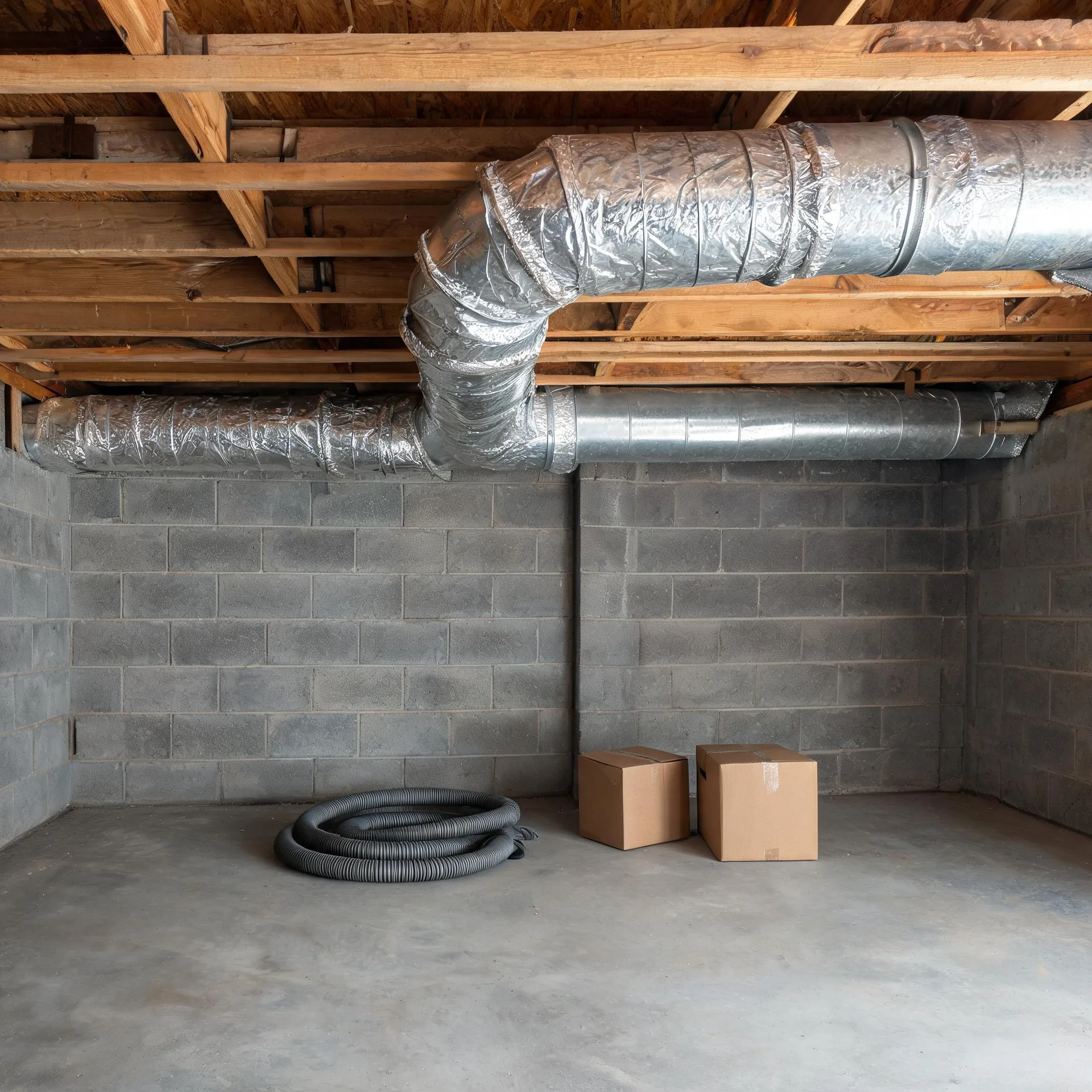
Ductwork laid down for an older system carries assumptions about airflow that a new central AC unit may not share. A contractor installing in this county has to assess whether the existing runs, returns, and sealing will move air the way the new equipment expects, and that assessment often reshapes the project before the unit is even ordered. Half the homes in Grand Traverse County, Michigan were built in 1986 or earlier (2020-2024 ACS 5-year). That vintage of construction means a meaningful share of the houses a contractor walks into here have ductwork that has never been matched to a modern cooling load. The electrical panel is the second check, since the draw of current equipment frequently exceeds what the original service was laid in to handle.
What a Central AC System Includes
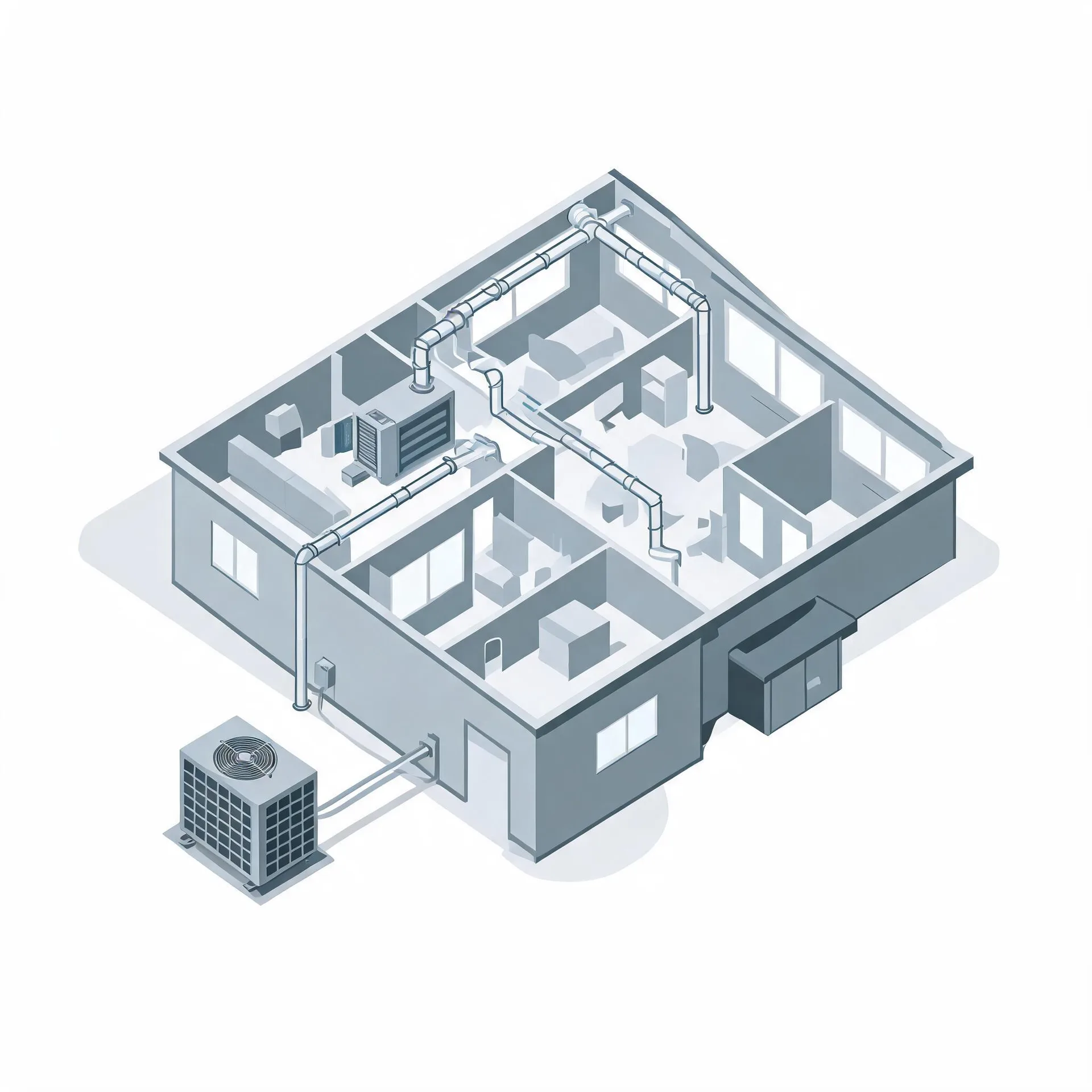
The outdoor condenser unit sits on a concrete pad beside the house and holds the compressor and condenser coil, which are the core components a contractor places during installation. Inside, the air handler or furnace blower sits in a basement, closet, or utility room and works with an evaporator coil mounted directly above it to complete the indoor side of the system.
A metering device, usually an expansion valve or fixed orifice, sits between the evaporator coil and the refrigerant line and governs how refrigerant enters the coil. The refrigerant line set itself runs between the outdoor and indoor units, and a condensate drain line carries moisture from the evaporator coil out of the house.
The drawing shows a typical layout, and a licensed contractor determines exactly what applies to your home.
Find a contractor in Grand Traverse CountyGrand Traverse County, by the numbers
78 severe weather events were recorded in Grand Traverse County, Michigan between 2015 and 2024.
NOAA National Centers for Environmental Information, Storm Events Database, bulk CSV export, events 2015-01-01 through 2024-12-31.Half the homes in Grand Traverse County, Michigan were built in 1986 or earlier (2020-2024 ACS 5-year).
U.S. Census Bureau, 2020-2024 American Community Survey 5-Year EstimatesGrand Traverse County, Michigan holds 47,003 housing units (2020-2024 ACS 5-year).
U.S. Census Bureau, 2020-2024 American Community Survey 5-Year EstimatesOwners occupy 77.2% of the occupied homes in Grand Traverse County, Michigan (2020-2024 ACS 5-year).
U.S. Census Bureau, 2020-2024 American Community Survey 5-Year EstimatesCodes & Standards Governing Central AC Installation in Grand Traverse County, Michigan10 sourced rules and standards
What the installation looks like from your side
Split-system central air conditioners rated below 45,000 Btu/h manufactured on or after January 1, 2023 must meet a federal minimum of 13.4 SEER2.
Split-system central air conditioners rated at or above 45,000 Btu/h manufactured on or after January 1, 2023 must meet a federal minimum of 13.4 SEER2.
Split-system central air conditioners manufactured between January 1, 2015 and December 31, 2022 had to meet 13 SEER, the metric that preceded SEER2.
Single-package central air conditioners manufactured on or after January 1, 2023 must meet a federal minimum of 13.4 SEER2.
Space-constrained central air conditioners manufactured on or after January 1, 2023 must meet a federal minimum of 11.7 SEER2.
Federal efficiency standards for split-system central air conditioners and heat pumps are set on each certified combination of outdoor unit and indoor coil rather than on the outdoor unit alone.
Residential and light commercial air conditioning and heat pump systems assembled in the field, including mini-splits and unitary systems, may not be installed on or after January 1, 2025 using a refrigerant with a global warming potential above 700.
A field-assembled system whose specified components were all manufactured or imported before January 1, 2025 carries no installation compliance date under the refrigerant restrictions and may still be installed.
Licensing Rules for HVAC Work in Grand Traverse County, Michigan
Michigan issues the mechanical contractor’s licence by classification: HVAC equipment, ductwork, refrigeration, hydronic heating and cooling, and limited or unlimited heating and refrigeration service are each a separate classification a contractor has to hold.
Michigan requires a mechanical contractor’s licence: nobody may install, alter or service the regulated mechanical work unless they, or an employee, hold a licence from the department that has not been revoked or suspended.
Severe Weather Events in Grand Traverse County
Weather puts a measurable load on cooling equipment, and that load is specific to where the equipment runs. A central AC system sized and installed for Grand Traverse County conditions works against the actual climate, not a generic one.
78 severe weather events, 2015–2024. Source: NOAA National Centers for Environmental Information, Storm Events Database.